 Image: Andreas Praefcke (CC BY 3.0)
How Einstein found his equations in November 1915
The field equations of general relativity were presented to the Prussian Academy of Sciences in Berlin on Thursday 25 November 1915. Three weeks earlier, on 4 November, Albert Einstein had presented a different set of equations and called them final. On 11 November he changed them, and on 18 November he used them to compute the orbit of Mercury and got 43 arcseconds per century, the number astronomers had been unable to explain since 1859. Then he changed the equations once more. The month is one of the best documented in the history of science, because the Academy printed each paper within days, and because Einstein wrote letters.
Eight years of trying
The idea came in 1907, while Einstein was still at the patent office in Bern. A person falling freely does not feel their own weight, so gravity and acceleration are, locally, the same thing. From this he predicted in the same year that clocks run slow in a gravitational field and that light bends near the Sun. Turning the idea into a theory took until 1915.
The mathematics was the obstacle. By 1912, in Zurich, Einstein had understood that gravity should be described by the geometry of spacetime, with ten functions, the components of the metric \(g_{\mu\nu}\), playing the role that one potential plays in Newton's theory. His friend Marcel Grossmann, a mathematician, pointed him to the work of Riemann, Christoffel, Ricci, and Levi-Civita on curved spaces. A notebook from that winter, the Zurich notebook, survives, and it shows Einstein writing down the Ricci tensor, the correct ingredient, and then abandoning it because he could not make it reduce to Newton's law in the right limit and because he had convinced himself, wrongly, that equations with full general covariance could not fix the field uniquely.
In 1913 Einstein and Grossmann published the Entwurf theory, with field equations that were not generally covariant. Einstein defended it for two years. He lectured on it in Göttingen in the summer of 1915 to an audience that included David Hilbert, who became interested enough to start working on the problem himself. By October 1915 Einstein had found that the Entwurf equations failed on two counts: they did not give the right answer for Mercury, and they did not make a rotating frame equivalent to a gravitational field, which was the whole point.
The four Thursdays
On 4 November he presented a paper that returned to the Riemann tensor of 1912. The equations said that the Ricci tensor is proportional to the energy and momentum of matter, \(R_{\mu\nu} = -\kappa T_{\mu\nu}\), under a restriction on the coordinates. On 11 November a short addendum removed part of the restriction by assuming that all matter is electromagnetic in nature, an assumption he would drop within two weeks.
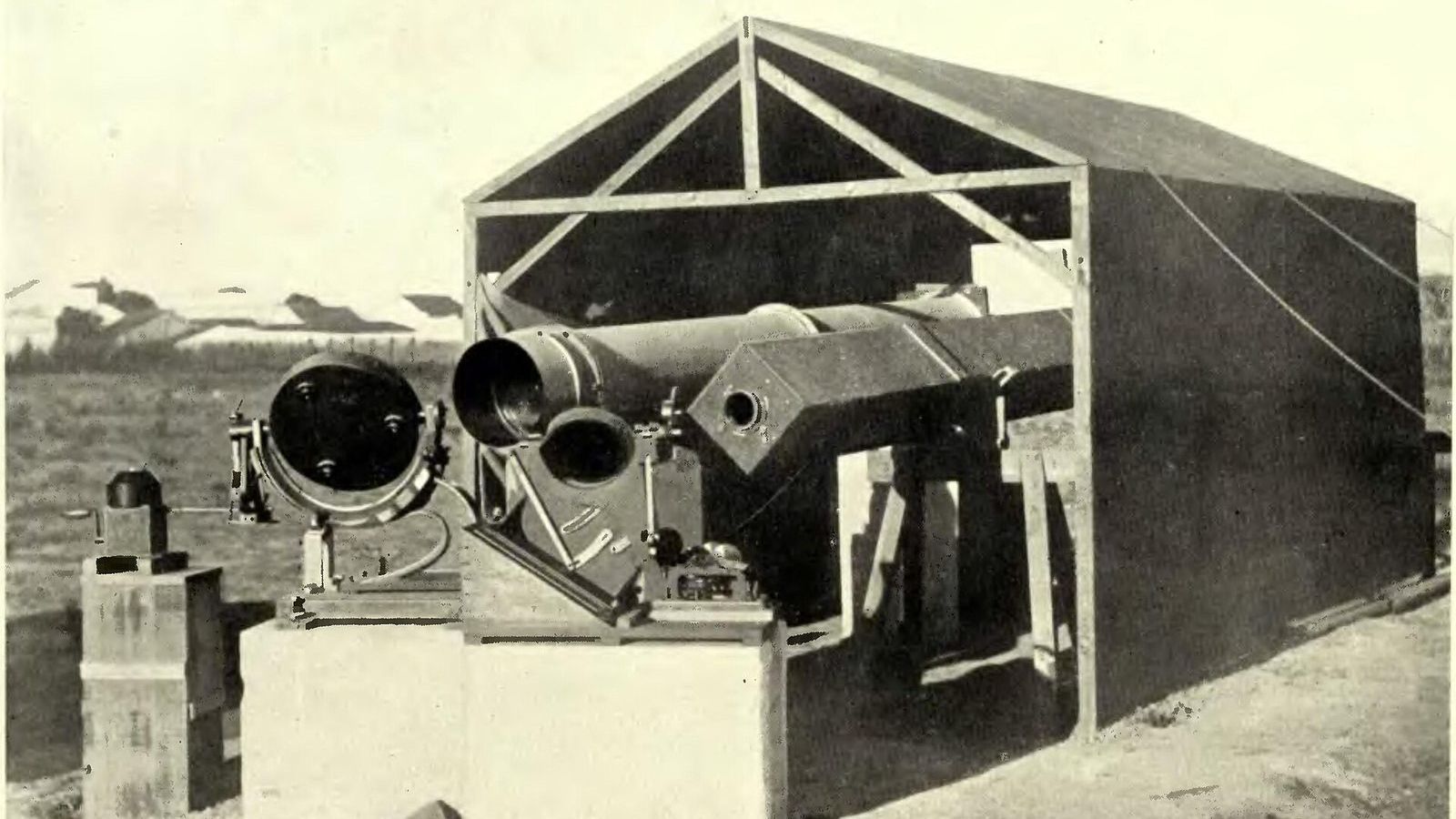
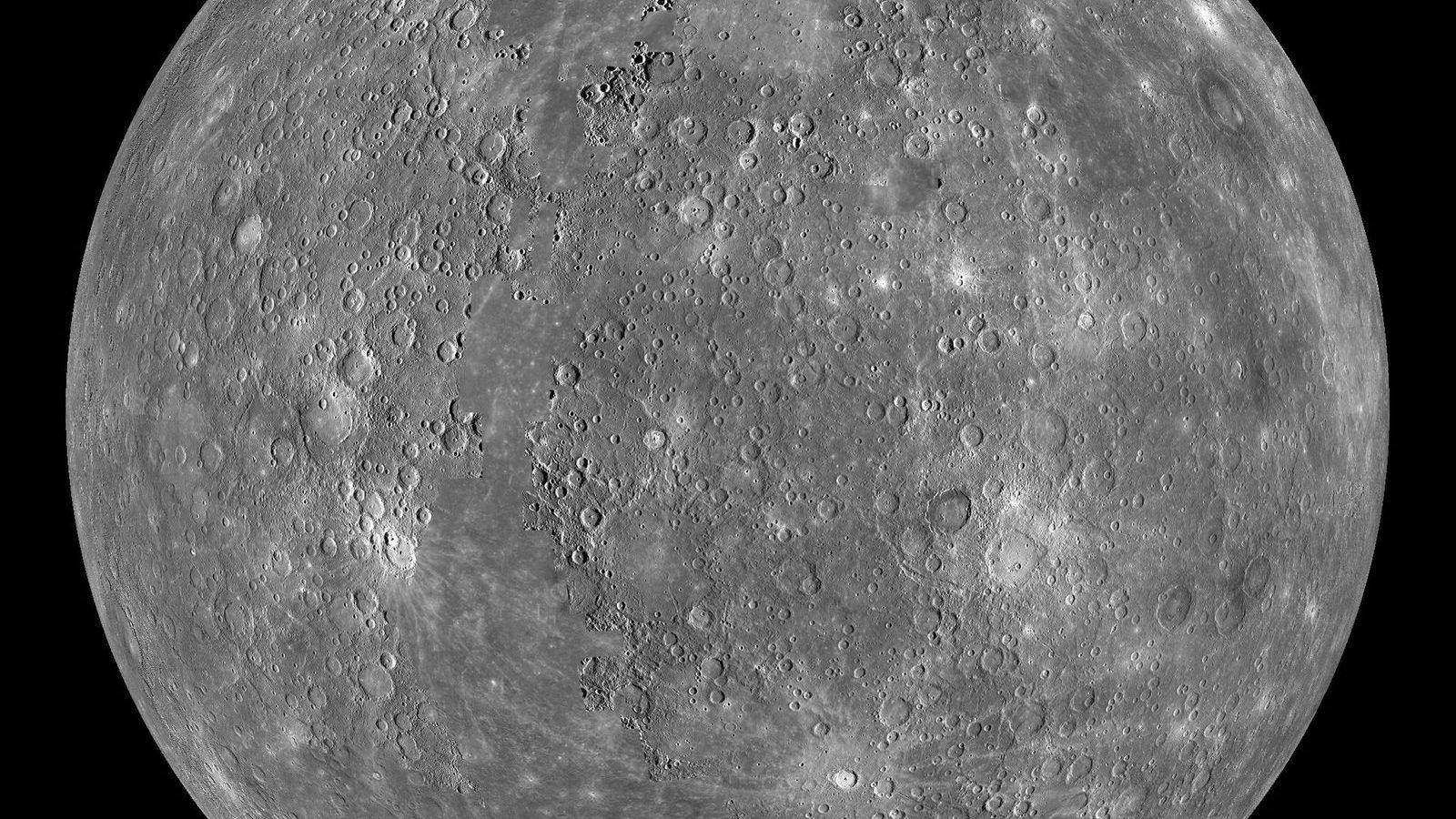
On 18 November he presented the Mercury calculation. The perihelion of Mercury's orbit advances by 574 arcseconds per century, of which Newtonian pulls from the other planets account for all but 43. Using the vacuum form of his new equations in an approximation good to the second order, Einstein found 43 arcseconds per century. He wrote to Paul Ehrenfest afterwards that he had been beside himself with excitement for days, and told a colleague that he had had palpitations. In the same paper he doubled his 1911 prediction for the deflection of starlight by the Sun, from 0.83 to 1.7 arcseconds, the number that the eclipse of 1919 would confirm.
On 25 November came the final paper, four pages long, titled The Field Equations of Gravitation. The change from 4 November was a term on the right-hand side involving the trace \(T\) of the stress-energy tensor, and the result can be rearranged into the form every textbook uses,
\[ R_{\mu\nu} - \tfrac{1}{2}\,R\,g_{\mu\nu} = \frac{8\pi G}{c^4}\,T_{\mu\nu}. \]The extra term is what makes the equations consistent with the conservation of energy and momentum in any coordinate system, and with it the coordinate restriction of 4 November disappears. These are ten coupled equations for the ten components of the metric, and they are the equations in use today, with the one addition of the cosmological constant that Einstein put in during 1917 and later removed. Unit 10 of the masterclass builds the left-hand side from the curvature tensors and shows why the trace term has to be there.
Hilbert
In Göttingen, Hilbert had been working on the same problem from a different direction, looking for the equations as the result of a variational principle, and he presented a paper to the Göttingen Academy on 20 November, five days before Einstein's final one. For most of the twentieth century this was told as a story of Hilbert getting there first. In 1997 three historians of science examined the printer's proofs of Hilbert's paper, dated 6 December 1915, and found that the version he had submitted on 20 November did not contain the field equations in their explicit form; those were added in revision after Einstein's 25 November paper had appeared. The two men exchanged letters through November, some of them sharp. By December they had made peace, and the equations carry Einstein's name while the action from which they follow carries Hilbert's.
What was and was not known on 25 November
Einstein had the equations, the Mercury result, and the light deflection, and no exact solution of anything. The first exact solution arrived within weeks. Karl Schwarzschild, serving as an artillery officer on the Russian front, read the 18 November paper and found the exact field outside a spherical mass before the end of the year; his letter to Einstein is dated 22 December 1915, and Einstein presented the result to the Academy on 13 January 1916. Schwarzschild died in May. The full account of the theory, the 1916 paper The Foundation of the General Theory of Relativity in Annalen der Physik, is where most physicists first read it, and it, the November papers, and the letters are all free to read, in German and in English translation, in the Collected Papers of Albert Einstein, volume 6 for the papers and volume 8 for the correspondence.
A century on, the sequence still rewards reading. The Mercury paper of 18 November shows a working physicist checking a half-finished theory against the one number he had, and the four-page paper of 25 November shows what it looks like when the number comes out right and the theory is then made consistent. The sentence Einstein wrote in it, that the theory of relativity had been completed as a logical structure, was for once not an exaggeration.